Thursday, June 18, 2009

Day #343 - Interstitial Lung Disease

This is likely to be my final blog of the academic term. It has been a great 'year in medicine'. I hope those of you who read this have gotten something out of it. It will be likely be resumed by the incoming chief resident(s) @ Mount Sinai and/or TGH in July. I will be continuing to blog about other cases as I progress through my Infectious Diseases fellowship. For anyone who cares to read, you will find that blog starting here in July.


Today we presented a challenging case -- where Occam's Razor again met head to head with Hickam's dictum.

The discussant began by talking about the various rheumatoid manifestations in the lung.

We then honed in on interstitial lung disease (previous blog on IPF here), and discussed the phenomenon of acute exacerbation of ILD (other review on non-IPF related AE-ILD here) -- a relatively new concept in respirology.

We also talked about the possibility -- and confirmation -- of pulmonary embolism. Noting of course that PE would not explain the diffuse ground glass opacities.

We discussed the possibility of a superimposed community acquired pneumonia, or TNF-alpha associated granulomatous infection and the need for treatment of same.

Tuesday, June 16, 2009

Day #341 - Likely TB Pleural Effusion

I missed it today -- but seems eeerily similar to this post....

Monday, June 15, 2009

Day #340 - Occular Myasthenia

Today we discussed a patient who presented with bilateral ptosis. EMG revealed evidence of myasthenia gravis and the patient responded to treatment with an acetylcholine esterase inhibitor.


The JAMA rational clinical exam series addresses the physical diagnosis of MG here.


History:


"speech becoming unintelligible during prolonged speaking" LR 4.5

presence of the peek sign increase the likelihood of myasthenia gravis LR 30 (eyes "peek" open within 30 seconds of closure)

Bedside Tests:


  • Ice test LR + 24 LR - 0.16
    (apply ice to the eyelids x 2 mins then evaluate response which should be immediate and short-lived)

  • Response to an anticholinesterase medication LR+ 15 LR - 0.11
    (give tensilon, look for response within 30 seconds lasting less than 5 mins)

  • Sleep test LR+ 53.0; LR - 0.16
    (have patient lie in a dark room resting the eyes for 30 mins, look for improvement of ptosis)
A review of autoimmune NMJ diseases is available here.

A discussion of myasthenia mimics is available here.

Friday, June 12, 2009

Day #337 - Cirrhosis (PBC)

Today we heard a case of a patient with decompensated cirrhosis (new diagnosis). The precipitant was likely a general anesthetic on the background of unrecognized cirrhosis.

Given the markedly elevated ALP with no bony symptoms and normal ducts on the ultrasound, we proposed a diagnosis of Primary Biliary Cirrhosis (see review here).

See the associated review/editorial on cholestatic liver diseases from a prominant Toronto hepatologist here.

I have also provided a link to a review article on Hepatitis C and HIV co-infection, since it was discussed and is relevant. There is some evidence that HAART may actually worsen the liver disease in these patients and that perhaps the HCV needs to be treated.

Thursday, June 11, 2009

Day #336 - Terminal Illeitis and Abscess

Today we heard a case of presumed Crohn's disease (new diagnosis) with intrabdominal abscess. A NEJM review is available here. American practice guidelines are available here.

The NEJM article on the radiation risk of CT scan is available here.

Wednesday, June 10, 2009

Day # 335 - Severe Influenza

Today we discussed a case that I have talked about before of severe influenza. This case highlights several key issues -- the most important is pointing out just how sick young patients can get with influenza.

We have previously talked about influenza here and pneumonia here.

Monday, June 8, 2009

Day #333 - Hyponatremia

I've previously blogged and referenced hyponatremia here

Friday, June 5, 2009

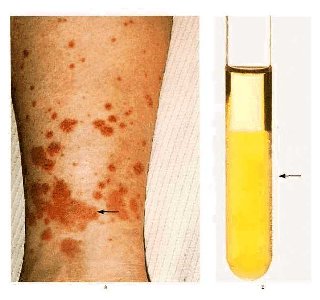
Day #330 - HSP

Today we heard about a patient with a diagnosis of Henock Schonlein Purpura (Henock left, Schonlein, right). A similar case is presented in the NEJM here.
They presented with a prodromal URTI (more common in patients younger than 30) and then:

  • Lower extremity purpuric rash (picture here)
  • Abdominal pain with or without gastrointestinal bleeding (GI manefestations reviewed here)
  • Symetrical arthritis of the large joints in the lower limbs
  • Macroscopic hematuria with the development of renal failure and nephrotic syndrome
While mainly a disease of children, approximately 10% of patients with HSP will be diagnosed as adults. In children severe renal disease is rare; however, in up to 30% of adults renal involvement can be severe and up to 10-15% of adults will develop severe renal disease. Treatment in these cases involve steroids with consideration of other immunosuppressants.

Poor prognostic signs include:

  • Creatinine more than 120

  • Proteinurea more than 1g/day

  • Fibrosis or necrosis on kidney biopsy greater then 10%.

The major differential of purpuric skin rash and macroscopic hematuria includes drug-induced hypersensitivity vasculitis, which usually has a good prognosis and cryoglobulenemic vasculitis, which has a much worse prognosis.


If you speak german, I think this is schonlein's book from 1832 where he first describes this condition.

I've been on a medical history theme this week -- here is an article from 1914 by Osler on HSP.

Thursday, June 4, 2009

Day #329 - Fever of Unknown Origin


Today we discussed a patient with fever of unknown origin (previous blogs here including links to the articles I mentioned)

I erred when I said that abdominal imaging was required prior to making the diagnosis -- however, given the ease at which we can get said imaging I would say that it probably *should* be required before labeling as FUO. Certainly, it should be the first test performed in the "second tier"

On the basis of profound inflammatory markers and microscopic hematuria (in the absence of other causes) I postulated that this case may be a medium-small vessel vasculitis such as microscopic polyangiitis. A classic NEJM review on small vessel vasculitis is available here and the corresponding article on medium vessel vasculitis is available here.

This article reviews the guidelines for the management of medium and small vessel vasculitis.

Wednesday, June 3, 2009

Day #328 Cushing Syndrome

Today we had a patient present with weight gain, facial changes, abdominal obesity, psychosis and hypertension with hypokalemia.
The most common cause of Cushing Syndrome is Cushing's Disease (ACTH producing pituitary adenoma 68%). Ectopic ACTH production and adrenal ademomas are the second most common causes at approx 10% each.

The clinical symptoms and physical signs are wonderfully illustrated in the figure below (with thanks to the TWH CMR who drew it)


The diagnostic algorithm (review here) is as follows:


  1. Confirm cortisol excess. 24h urine cortisol or the 1mg overnight dexamethasone supression test are the best in terms of sensitivity and specificity.

  2. Is the ACTH high? If yes proceed to evaluate for adrenal adenoma or ectopic ACTH. Is ACTH low? Look at the adrenals.

ACTH High (see original publication by Hurst -- former faculty @ Toronto (memorial tribute here) from 1928 lancet)

From the diagnostic algorithm article: "A woman with mild to moderate hypercortisolism, a normal or slightly elevated plasma ACTH, and normokalemia has at least a 95% likelihood of having Cushing’s disease. In contrast, a patient with prodigious hypercortisolism, hypokalemia, and marked elevations of plasma ACTH may be more likely to have an occult ectopic ACTH-secreting tumor. "

Pituitary MRI is the next step:

Adenoma -- likely not ectopic ACTH (above) = resect

No adenoma, or likely ectopic ACTH = more evaluation

The 8mg dexamethasone suppression test is not sensitive or specific.

Petrosal sinus sampling with CRH stimulation is the best diagnostic test, but is invasive.

If ectopic ACTH confirmed:

bronchial, thymic carcinoids or other neuroendocrine tumors (e.g. islet cell, medullary carcinoma of the thyroid, or pheochromocytoma)

CT thorax and abdomen may find the tumor. If negative consider octreotide scan. Sometimes you won't find it.

Tuesday, June 2, 2009

Day #327 Anuric Renal Failure

Today we heard a case of a patient post ETOH binging who presented with acute anuric renal failure. We briefly discussed hepatorenal syndrome and then abandoned this diagnosis.

We discussed an approach to renal failure.

We then discussed the possibility of interstitial nephritis, and the role (or lack therof) of testing for urine eosinophils which I have blogged about here.

Some speculations included undiagnosed/untreated pancreatitis or rhabdomyolysis leading to pre-renal azotemia and subsequent acute tubular necrosis (review here).

A nature review of the value of the competant microscopy urinalysis is available here.

Ultimately this patient will have a renal biopsy to make a more definitive diagnosis.

Monday, June 1, 2009

Day #326 Renal Failure and Hemolysis


Today we presented a case of a patient with hepatitis C presenting with a presumed non-antibody mediated hemolytic anemia with renal failure and hematuria.


We have discussed the vascular and renal complications of Hepatitis C, including cryoglobulinemia and membranoproliferative glomerulonephritis previously. Another good review of crytoglobulinemia and hepatitis C is available here.


Note that hemolysis is not a common feature of this syndrome. It is possible that the anemia is related to GI bleeding, particularly small bleeding caused by mesenteric ischemia from vasculitis. Perhaps this isn't hemolysis, particulary because the bilirubin is not elevated (see approach to hemolysis) even though the haptoglobin is low and the LDH is mildly elevated.


This article reviews 'cold hemolytic anemia' or hemolytic anemia related to IgM mediated antibodies and can be seen occasionaly in cryoglobulinemia.

Friday, May 29, 2009

Day #323 - Autoimmune Hepatitis

See approach to massive transaminitis here.

There is a nice NEJM review on autoimmune hepatitis here. The table below is linked from there.


Labs:

  • In general, ANA is positive more than 1:80, anti-smooth muscle antibody 1:80, there is an elevated IgG, pANCA may be positive

Treatment:

  • Prednisone 20-60mg per day with AZATHIOPRINE 50-100mg per day
  • Maintentance with AZATHIOPRINE (or other)
  • Goal is normalization of liver enzymes and IgG.

Thursday, May 28, 2009

Day #322 - Enterococcal Endocarditis

This patient presented with stroke. This article reviews stroke in IE. This related article reviews the neurologic manifestations of IE.


An original article by Osler on IE!


Some key points:
Mitral Valve IE ~ 10% stroke rate
Mortality is high -- 35% in hospital 52% at one year
Early antibiotic therapy reduces neurologic complications


I have previously blogged about infective endocarditis (see here) including enterococcal endocarditis. The first post goes over the Duke Criteria.


Indications for Surgical Treatment of IE (Native Valve):


  • Development of heart failure
  • MR/AR with dilating LV, or development of pulmonary hypertension
  • Fungal IE or that caused by highly resistant organisms (think of it in MRSA)
  • Patients with heart block, cardiac abscess, abnormal chamber-chamber connections
  • Recurrant emboli despite ABX
  • Class IIb -- large vegetations

Wednesday, May 27, 2009

Day #321 - Polyarticular Gout

Today we discussed a patient with polyarticular gout presenting with fever and multiple swollen joints.

Precipitants:

Drugs: HCTZ, other diuretics, ASA, pyrazinamine, allopurinol, cyclosporin, other
Foods: Alcohol (red wine), Red Meat, Cheeses
Diseases: Myeloproliferative disorders, hematologic malignancies, renal failure


Diagnosis (how to do an arthrocentesis):

Synovial fluid cell count usually in the 10,000-20,000 range but can be as high as 100,000.

Crystals should be seen -- negatively birefringent needle shaped crystals which are intracellular

Acute Treatment (usually one of):


NSAIDS: I.e. Naproxen 500mg PO BID
Steroids: Intrarticular (i.e. depomedrol 20-40mg) or systemic prednisone (i.e. 40mg x 3 days then taper by 10mg every three days)
Colchicine: colchicine 0.6mg po q1h x3 (diarrhea, nausea) then 0.6 OD-BID (renal dosed)

Long term Treatment:
Weight loss, avoidance of foods and drugs that precipitate

Initiate low dose colchicine if you are going to start anti-hyperuric medications to avoid precipitating an attack

Generally initiate therapy if one/more of: (i) urate nephropathy or recurrent stones (ii) destructive tophi (iii) greater than three attacks per year (iv) greater than 1100mg urinary urate per day

Some advocate for use of 24h urine urate -- if >800 then uricosuric therapy is contra-indicated. Titrate to uric acid less than 360umol/L

Uricosuric therapy:

Probenecid start 250mg BID titrate to 500-1000 BID

Consider vitamin C 500mg PO OD

Consider losartan as an antihypertensive if needed (has uricosuric effect)

Consider fenofibrate

Xanthine Oxidase Inhibition:

Allopurinol 100mg PO OD titrate to effect (usual dose ~ 300mg/day)

I have previously blogged about the approach to the mono/oligo arthritis (and septic arthritis) here.

Tuesday, May 26, 2009

Day #320 - Hypercalcemia from Presumed Sarcoid

A great case today -- and some good topics were covered by the discussant.

1) Hypercalcemia (previously blogged here)

2) Hepatitis C and its complications including:
* Mixed cryoglobulinemia (image) which can cause a vasculitis
* Membranoproliferative glomerulonephritis (review here)
* Porphyria Cutanea Tarda
* HCV Associated Lymphoma

3) Sarcoidosis (from review)

"sarcoidosis is established on the basis of compatible clinical and radiologic findings, supported by histologic evidence [review] in one or more organs of noncaseating epithelioid-cell granulomas in the absence of organisms or particles"
"as a diagnostic tool, measurement of serum ACE levels lacks sensitivity and specificity"


Fascinating --> Evidence exists that sarcoidosis can be caused/exacerbated by HCV treatment with interferon.

Monday, May 25, 2009

Day #319 - Temporal Arteritis


History:
  • Jaw Claudication LR + 4.2 LR - 0.72
  • Diplopia LR + 3.9 LR - 1
Other historical features not helpful to rule in or out. Most sensitive sign is headache (~70%) other signs and symptoms have sensitivity less that 50%

Physical:
  • Beaded temporal artery LR + 4.6 LR - 0.9
  • Prominant Temporal Artery LR + 4.3 LR - 0.7
  • Tender Temporal Artery LR+ 2.6 LR - 0.8

Other physical exam findings are not helpful to rule in or rule out. Most sensitive is combination of ANY temporal artery abnormality (~75%)

Laboratory:

  • Normal ESR LR - 0.2 (96% sensitive)

An review on the diagnosis and treatment of GCA/TA is available here. We discussed the relative merits of TA biopsy when the diagnosis is highly likely. The authors suggest that it is important to confirm the diagnosis because if negative, while it could still be TA, this should prompt a re-evaluation of the diagnosis as up to 50% will have an alternative diagnosis.

We then discussed the relative merits of TMP/SMX prophylaxis for PCP in patients on high dose steroids (Table below) from this meta-analysis. In general, though there is no consensus, PCP prophylaxis should be considered in patients on greater than 30mg of prednisone for greater than three months or those who are on moderate-high dose steroids with another immunosuppressive agent (i.e. patients with Wegner's)


Friday, May 22, 2009

Day #316 - Swine Flu

Today we heard a case of a patient with undelying Wegner's Granulomatosis who presented with several days of fever and cough. Her chest xray showed no infiltrate. The majority of patients with influenza will present with cough (90%) and fever (~70%). Headache, myalgias, arthralgias, fatigue are also common but seen in only 50-60%. There is a rational clinical exam on influenza here.

The nasopharyngeal swab revealed influenza, which was PCR confirmed to be "swine flu"
Influenza evolves by two processes. Antigenic drift, where small mutations occur over time in the surface molecules which gradualy cause waning immunity. This is the basis of seasonal influenza.
Antigenic shift invoves abrupt changes in the surface molecules, often as a conseuqnce of recombination with swine or avian lineages, into a strain to which few in the population are likely to have immunity. This leads to epidemic (and pandemic) influenza.

Treatment of Influenza:
  • Supportive care
  • In patients admitted to hospital/ICU or those with severe disease or severe undelying co-morbidities should receive antiviral therapy (also give to healthy people with less than 72h of symptoms)
  • Oseltamavir (neuraminadase inhibitor -- blocks entry of virus into cell) --> available orally, circulating H1N1 are resistant, circulating H3N2 are likely resistant.
  • Zanamavir (neuraminadase inhibitor) --> inhalational only, all are currently succeptible
  • Amandadine (M channel inhibitor) --> blocks release of viral RNA into the cytoplasm from the lysosome. Available orally, most H3N2 resistant, many H1N1 succeptible.
I have previously blogged about influenza here, here, and here.

Thursday, May 21, 2009

Day #315 - Sepsis with DIC

Today we discussed a great case of SEPSIS (focus of infection unclear) with associated DIC.

SIRS Criteria:
Fever or hypothermia
WBC >12,000 or less than 4,000
HR >90
RR >20


Sepsis = 2 or more SIRS criteria of presumed infective etiology
Severe sepsis includes sepsis with end organ dysfunction or lactate >4

Septic shock includes severe sepsis with refractory hypotension requiring inopressors
I have blogged about Early Goal Directed therapy here. Source control is as essential as broad spectrum antibiotics in the treatment of sepsis.

These are recent guidelines on the diagnosis and management of DIC here. Transfusion of plateletes and factors is limited to patients who are bleeding or at high risk of bleeding (i.e. post-op), therapeutic heparins are limited to patients who have thrombosis, DVT prophylaxis is required.

Wednesday, May 20, 2009

Day #314 - Pulmonary Eosinophilia

Very complex case facilitated by an expert discussant. The key focus, other than on the case at hand was a demonstration of clinical reasoning and Bayes theorem.

We highlighted the importance of Occam's Razor -- but stressed the importance of recognizing Hickam's dictum.

I have previously blogged about pulmonary eosinophilia here (with references). In my mind, an important consideration in this patient (given travel to China) is to exclude disseminated strongyloidiasis because like infliximab related interstitial lung disease (NEJM article here) 'strongy' can appear to improve on steroids.

This is a recent review from the Lancet on TNF-alpha blockade and the interaction with tuberculosis.

NB: Review of radiographic manifestations of pulmonary TB.